

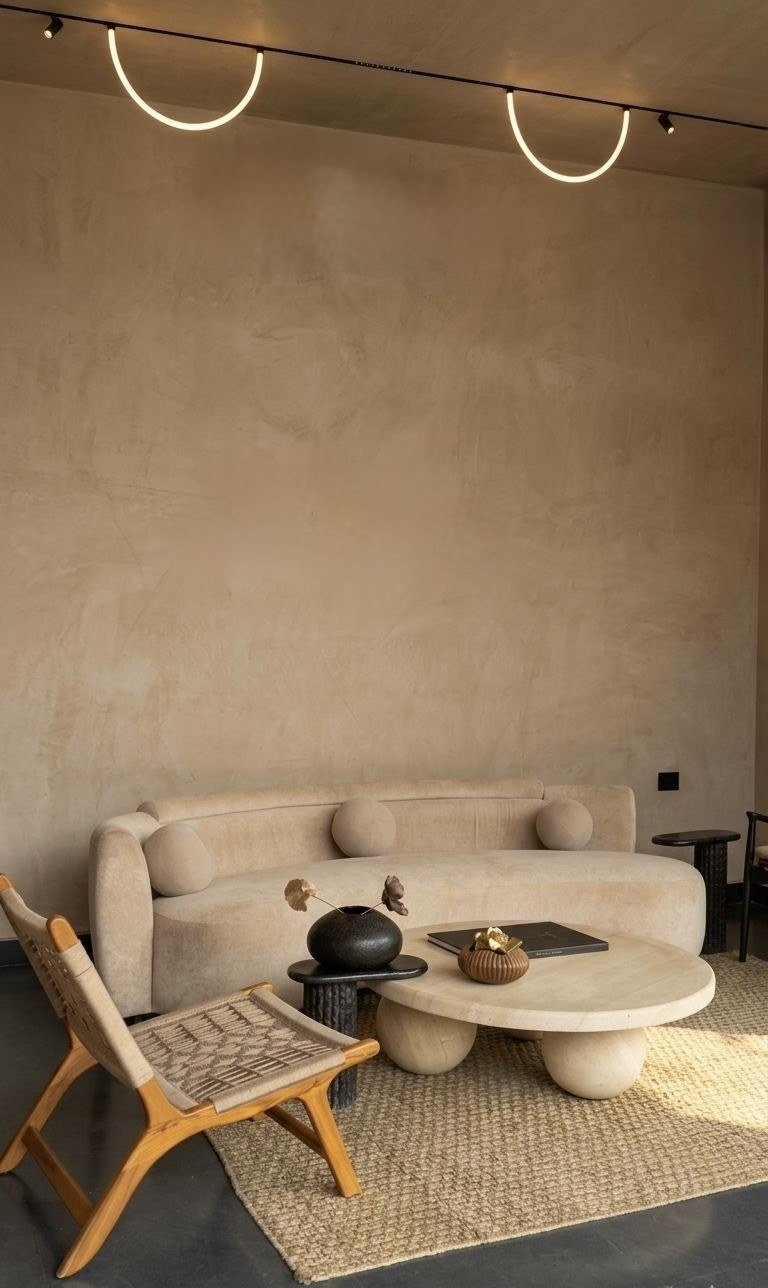
The walls at Upasna Aurallis are not painted. They are lime plaster, put on by hand, coat over coat, in a sand colour taken from the earth and rock of the Aravali hills outside Jaipur. It was the first decision on the project and the one that decided everything after it. Here is why we chose it, what it cost us in time, and what we would tell anyone thinking of doing the same.
What lime plaster is, and what it is not
Lime plaster is limestone burnt, slaked with water, aged, and mixed with fine aggregate. Applied to a wall it slowly takes carbon dioxide back from the air and turns, over months, back into stone. That is the whole point of it. Paint is a film on a wall; lime plaster becomes the wall. It breathes, so moisture moves through it instead of blistering behind it. It is alkaline, so mould does not like it. Small cracks close themselves as the surface carbonates. And it does not look like anything else: the colour sits inside the material, not on top of it, and the trowel leaves a record of the hand that made it.
It is not new to Rajasthan. The polished lime finish the havelis of Jaipur are known for — araish — is the same material taken to a mirror. We did not want the mirror here. We wanted the stone.
Why not paint, veneer or micro-cement
Paint would have been faster by weeks and cheaper by a wide margin, and the room would have been flat. Texture paint gives you a pattern that repeats. Stone veneer would have given the look of rock without its depth, and every joint would have shown. Micro-cement is close in feel but harder and cooler, and it does not breathe. Lime gave us the one thing the brief needed: a surface that reads as calm from across the room and as alive from a foot away, and that changes with the light through the day.
What it cost us in time
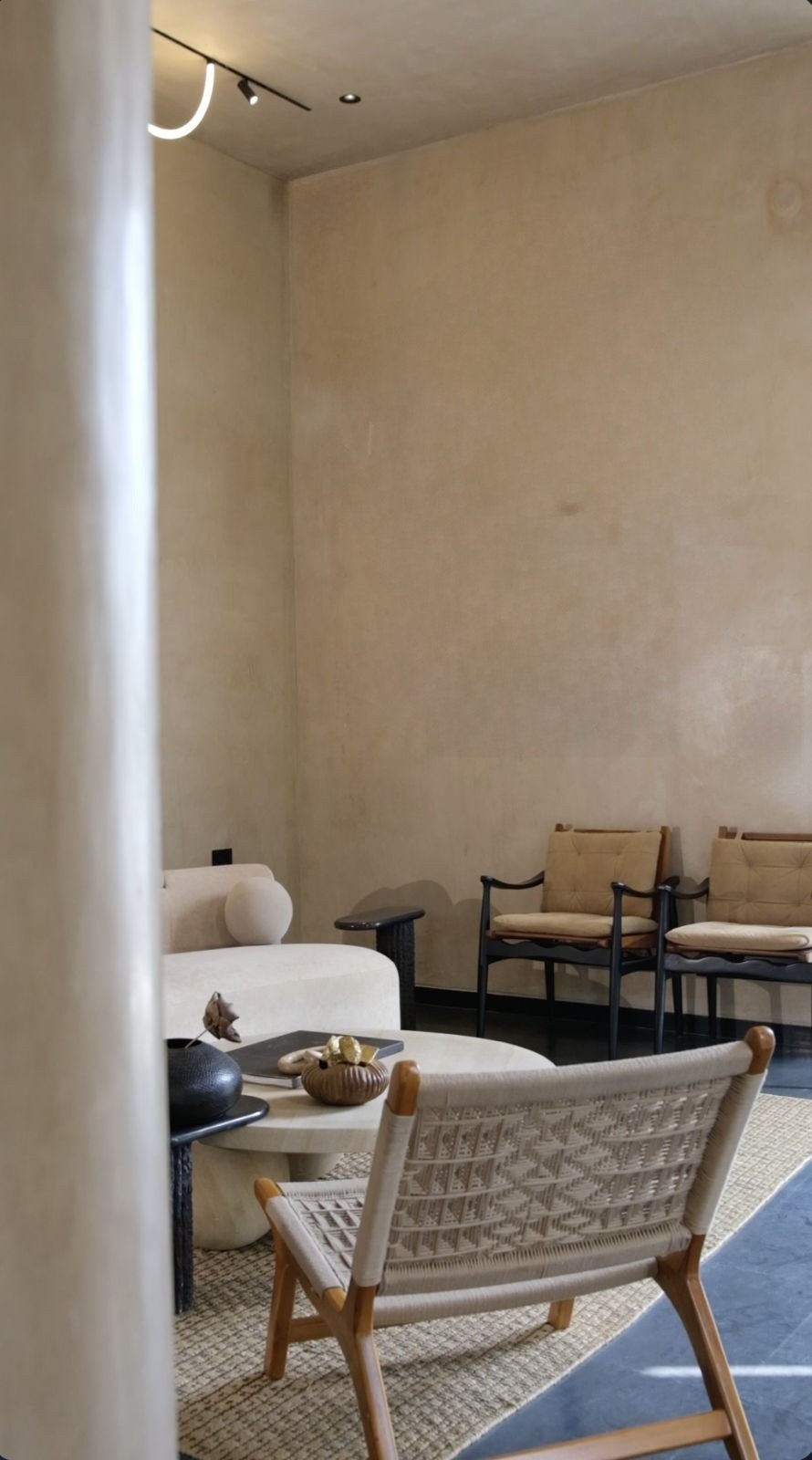
Lime plaster sets the programme, not the other way round. Each coat is thin and each needs drying time before the next; rush it and it crazes. The colour is mixed into the material, so every batch has to match the last, and the burnishing at the end — the pass of the trowel that gives the surface its soft sheen — can only be done in a window of hours when the coat is firm but not dry. On this project the plaster was the longest trade on site, and we positioned the lighting only after the walls were finished, so that the fittings answered the surface rather than the drawing. If you want lime, build the weeks into the schedule at the start, not the end.
Three things to get right
First, colour. A sample on a board and a wall of forty square metres are different animals. Approve the colour on a full wall, in the room’s own light, at two times of day, before the rest of the walls are started — and keep every batch to the same recipe, because the whole room depends on the walls agreeing with each other.
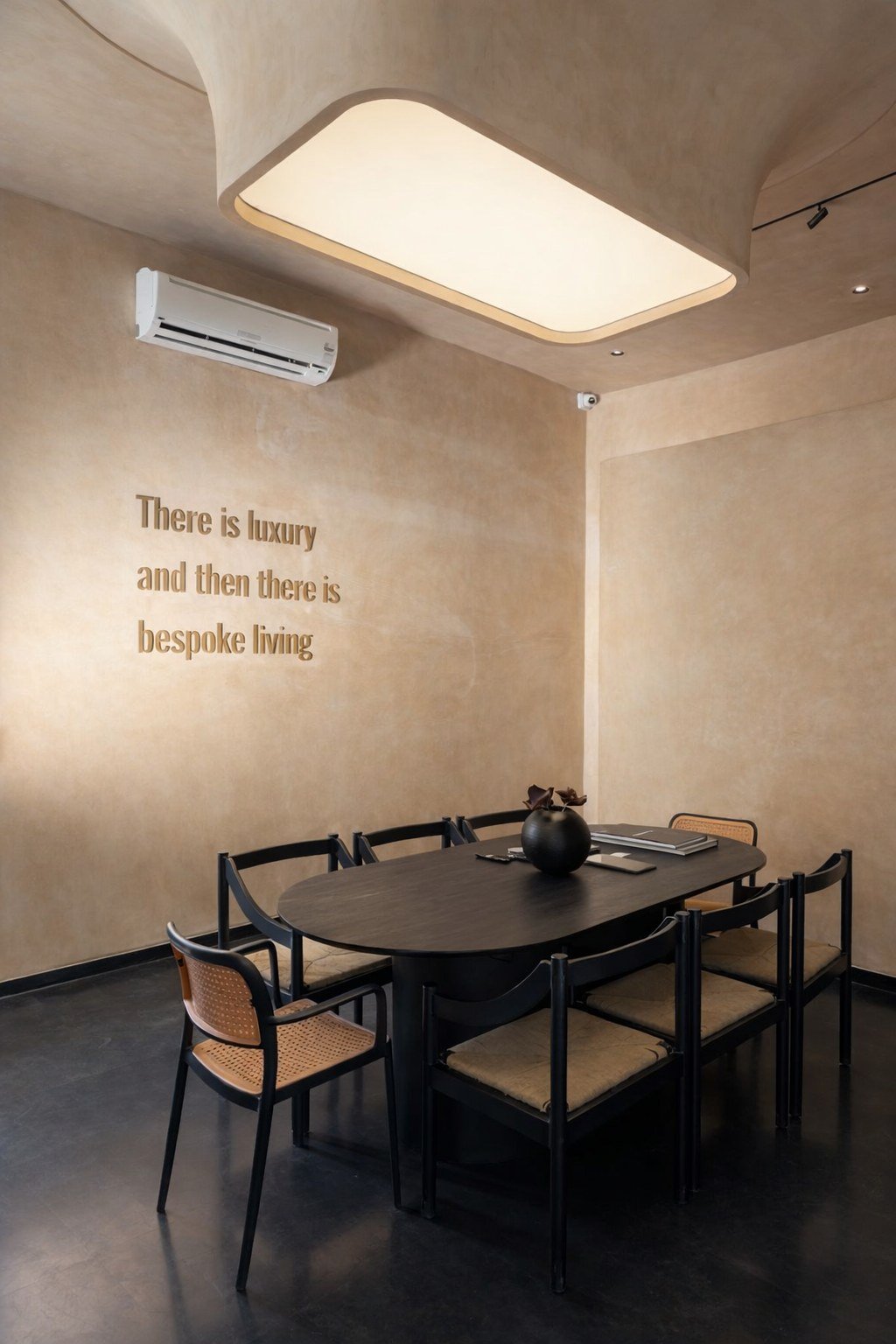
Second, corners. Lime wants rounded arrises, not sharp ones; a sharp external corner in lime chips. Soften every exposed corner in the plan. It is one reason the partition at Upasna is a curve, and the room is better for it.
Third, the other trades. Electricians and air-conditioning fitters do not think about a wall that is still breathing. Sequence the services first, protect the finished walls, and keep the plasterer available until the last fitting goes up.
Living with it
A lime wall wants a little care and rewards it. No harsh cleaners, nothing acidic; a soft cloth, and a wax or soap finish renewed every few years if the surface is one people touch. It marks, slightly, and the marks become part of it. Ten years from now the walls at Upasna will look better than they did on the day we handed over the keys. We cannot say that about paint.
Should you do it?
Yes, if the wall is going to be looked at for a long time, if you can give the programme the weeks, and if you can find a plasterer who has done it before — in Jaipur we are lucky in that. Not for a rental you will leave in two years, not for a room that has to be finished by Diwali, and not on a wall that will be scrubbed. For everything else, it is the material we reach for first, and it is why the rooms at Upasna feel the way they do.
See the full project: Upasna Aurallis. Planning a home or a workplace with walls like these? Write to us with what you are planning and where.
Interior design, architectural design and turnkey execution by NYKS Interior Design Studio. Studio in Jaipur; projects across India and for families overseas.